Vocabulary: Oxford Word of the Year

Vocabulary: Popular words in 2024
Intermediate to advanced level (B2-A2)

Oxford University Press (who publish a lot of English language learning books) are inviting people to vote for their word of the year. Their shortlist is:

Brain rot – not a new expression but used more and more on social media to say that looking at too much social media can negatively affect your mental health or intellectual powers.

Demure – again not a new word. In fact it has been used for hundreds of years. It is being used on TikTok to mean not showing off or being reserved.

Dynamic pricing – once more, it is not a new expression but is being used because of ticket priced changing as a result of demand.

Lore – a very old word connected with teaching and facts. In social media it is now being used to describe the background information on and history of a celebrity.

Romantasy – used a lot on TikTok. It is a combination of romantic and fantasy to describe a book.

Slop – used for over a hundred years to describe low quality literature. It is now being used for low quality or inaccurate text generated by AI.

Vote for your favourite at Oxford University Press

Advanced vocabulary: 23 words and phrases

Advanced vocabulary: higher-level words and phrases 
Intermediate to advanced level (B2-C2)

Here are 23 advanced words and expressions that have come up in my higher-level 1-1 and Skype lessons over the last couple of months. Do you know them? Continue reading

Vocabulary: Adding ‘wise’ to form adverbs

Vocabulary: Adding ‘wise’ to make adverbs from nouns
Intermediate to advanced level (B2-A2)

It is useful to have a rather informal way to express ‘concerning’ or ‘relating to’ which we can use in speech and writing. You take a noun and add ‘wise’, often with a ‘-‘. Some are more common than others. Let’s look at a few:
Continue reading

Listen to the origin of English (and many other languages)

Listening: the origin of English (PIE)
Lower intermediate to advanced level (B1-C1) 

Studies suggest that the origin or roots of English, German, Spanish, Hindi, Russian and about 400 other languages come from what is called ‘Proto-Indo-European’ or ‘PIE’. Listen to what it might have sounded like here:

Continue reading

Vocabulary: ‘Post-truth’ – word of the year

Vocabulary: ‘Post-truth’ – word of the year
Intermediate to advanced level (B2-A2)

Oxford Dictionaries word of the year is ‘post-truth’. You can see it used in the phrases ‘post-truth politics’ and ‘post-truth world’. It refers to situations where public opinion is shaped less by ‘objective truth’ than by beliefs and opinions.  Continue reading

Reading: Getting close to the EU referendum

Reading: the EU referendum
Intermediate to lower advanced level (B1-C1)

On 23 June this year, a referendum will take place in the UK. The question to be voted on is: “Should the United Kingdom remain a member of the European Union or leave the European Union?” Continue reading

Adverbs for Cambridge English Advanced and IELTS interviews

Exam tips: the Cambridge English Advanced and IELTS interview
Upper intermediate to advanced levels (B2-C1)

You only have a short time to show how good your English is in the Cambridge English Advanced (CAE) or IELTS interview. How can you do it? Continue reading

Listening: A wide range of science podcasts

Listening: a wide range of science podcasts
Lower intermediate to advanced level (B1/C2)

If you are interested in science, technology or medicine, you can stream or download a very large number of podcasts from the Naked Scientists, a team of scientists, doctors and communicators based at Cambridge University’s Institute of Continuing Education (ICE). Science podcasts

Continue reading

Grammar: When to use ‘whether’

Grammar: when to use ‘whether’
Lower intermediate to lower advanced level (B1/C1)

In many cases you can use ‘whether’ or ‘if’ and your sentence will be grammatically correct but in some cases you can only use ‘whether’. Continue reading

Vocabulary: ‘Among’ or ‘between’

Vocabulary: ‘among’ or ‘between’
Intermediate to advanced level (B1-A2)

Many learners wonder how to use these words correctly. Some people give the simple rule that you should use ‘between’ with two things/people and ‘among’ when you have more than two. However, in practice, it is a little different. Continue reading

Listening: Good website for podcasts

Listening: Good website for English podcasts
All levels


Here is a link to nearly 300 English podcasts from a teacher called Luke: 
These ones have full transcripts:  http://teacherluke.co.uk/episodes-with-transcripts/

Continue reading

FCE writing tips

Cambridge First (FCE) writing tips
Upper intermediate level (B2)

Many people will be taking the Cambridge First exam this summer. To get ready you will probably need to write a lot of essays. An important tip is to keep a list of your most common FCE writing mistakes and check this list before you write. Continue reading

Reading: The General Election

Reading: the General Election
Intermediate Level (B1/B2)

On Thursday May 7th there will be a General (national) Election in the UK. Nowadays this takes place every five years. The electorate can vote for one candidate in their constituency (local parliamentary area). The winner in each constituency will become the local MP (Member of Parliament). Continue reading

Vocabulary: Mention – a great verb to know

Vocabulary: Mention – a great verb to know
Intermediate to advanced level (B1-C1)

The verb ‘mention’ is one of the verbs we can use to talk about what someone has said or is going to say. It’s really useful because using ‘tell’ or ‘say’ is not always appropriate. Let’s look at some examples: Continue reading

Vocabulary: Approximate numbers

Vocabulary: approximate numbers
Intermediate to advanced level (B1-C1)

When we communicate, we often want to use words or expressions that are approximate. This is common when we have to talk about numbers. This might be because we don’t know the exact numbers or amounts or because we don’t want to give them. Here are some of these words and expressions: Continue reading

Vocabulary: Tell (but not what you think)

Vocabulary: the verb ‘tell’
Intermediate to advanced (B1-C1)

You probably know how to use ‘tell’ in sentences like ‘He told me where to find a good restaurant.’ However there is another really useful meaning of ‘tell’. Continue reading

Vocabulary: Adjective, verb and noun combinations

Vocabulary: adjective, verb and noun collocations and website
Intermediate to advanced level (B1-C2)

Many English words are commonly used with certain other words and these become like mini-expressions. For example, if someone has a serious problem or is in serious difficulty, you can say ‘He is in deep trouble‘. However you can’t say ‘he is in heavy trouble‘. Only some combinations are used. Your language probably has similar combinations or collocations. Continue reading

Vocabulary: Word families (FCE/CAE/CPE tips)

Building your vocabulary (FCE/CAE/CPE): Word families
Intermediate to advanced (B1-C2)

Why learn one word when you can learn more? Building your vocabulary is essential for many English exams e.g. Cambridge First, Advanced and Proficiency and helps you make more sense of English. Continue reading

Vocabulary: ‘May’ and ‘might’

Vocabulary: ‘may’ and ‘might’
Pre-intermediate to advanced level (A2-C1)

‘May’ and ‘might’ can be used to talk about possibility and asking for permission. Looking at some examples will help to show their meanings. Continue reading

Vocabulary: ‘another’ v ‘different’

Vocabulary: ‘another’ and ‘different’ 
Pre-intermediate to intermediate level (A2-B1)

Would you like another drink or something different? This is asking if you want one more beer or a different kind of drink, for example, a lemonade. Continue reading

Vocabulary: Shakespeare’s 450th birthday

ShakespeareVocabulary and culture: 10 useful expressions from Shakespeare
Advanced level (C1-C2)

This week we celebrate Shakespeare’s 450th birthday (historians disagree about the exact day) with 10 Shakespearean sayings or sayings that Shakespeare made better known. Continue reading

Reading: The UK: in or out of the EU?

EU Flag.pngcrReading: the UK and the EU
Intermediate to lower advanced level (B1-C1)

Before we look at the situation now, here is some history. Britain joined the European Economic Community (now the EU) in 1973. Continue reading

Vocabulary: Education

Vocabulary: education
Intermediate to advanced level (B1-C1)

A good exercise (especially for Cambridge FCE) is to think about your own education and how you could describe it. Here is someone’s story:

Continue reading

Vocabulary: Mind (2)

Vocabulary: ‘mind’ as a verb
Lower to higher level English (A2-C1)

‘Mind’ can be a verb and is often used in conversation. It is an important verb to understand and use correctly. It has several meanings. Continue reading

Vocabulary: Rhyming expressions

Vocabulary: expressions that rhyme
Advanced level English (C1-C2)

There are an interesting group of words and expressions that usually have two elements that rhyme. I recommend you listen out for them and try to develop a feel for how they are used. Here are a few:

Wishy-washy (adj) Continue reading

Reading: Margaret Thatcher

Reading
Very advanced level (C2)

Yesterday Margaret Thatcher died. Some people were sad but others celebrated her death by opening bottles of Champagne and dancing in the street. However most would probably agree that she was one of the most formidable politicians of the 20th century who changed the economic and political face of Britain. Continue reading

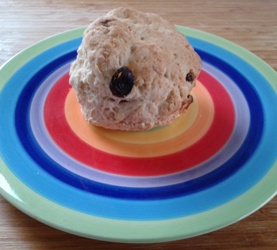
Reading: How to cook English scones

scones

Reading: scones
Intermediate to higher level (B1-C2) 

Scones are a fun tea-time British treat.
You can make them in about 30 minutes
and eat with jam and cream.

My recipe (personally tested!) will make about 6 scones.

Continue reading

Speaking: Congratulating a business colleague

Speaking: Business dialogue
Intermediate to advanced (B2-C2)

Imagine you have just come out of a business meeting where a close colleague (Harry) was very impressive. You decide to tell him what you think. Here is a possible English dialogue: Continue reading

Reading: 10 miles south of Oxford

It takes about 20 minutes to drive from Oxford to a village called Little Wittenham. It’s a popular place for walking because you get great views from the top of the nearby hills (Round Hill and Castle Hill). The hills, which are usually known as the Clumps, have wild flowers on their slopes and beech trees at their tops. You can see birds such as skylarks, buzzards and red kites.

From the top of Round Hill you can see the river Thames as it meanders by the pretty village of Dorchester (you can see Dorchester Abbey in the photo). If you have time, it’s a good place to have a picnic before walking down the hills and exploring the woods below.

In Little Wittenham there is an organisation called Earth Trust which seeks to encourage sustainable living. At the moment Earth Trust has 1,200 acres of woodland, research plantation, meadow, wetland and farmland.

Vocabulary and speaking: It’s hot but how hot?

Vocabulary and speaking
Pre-intermediate to upper intermediate level (A2-B2)

This week summer arrived. Now the temperature around Oxford is about 28 C. Of course you might not think that this is very hot but for most people here it’s hot enough. The maximum ever temperature in Oxford was 35 C. Continue reading

Vocabulary: A sporting week full of adverbs

Lower level (A1/A2)

You use the words in bold to talk about how often you do something:

Every Sunday morning I play golf with my friends. After the 18th hole we always have a large lunch and then go home. On Mondays I often play tennis with my cousin Susan at her sports club. If I don’t play tennis I watch horse racing on TV. Continue reading

Vocabulary: ‘Must not’ and ‘don’t have to’

Vocabulary: verbs ‘must’ and ‘have to’
Pre-intermediate level (A2/B1)

Here are some of the rules for the staff at 2 companies using ‘must not’ and ‘don’t have to’: Continue reading

Vocabulary: You have to read this!

Pre-intermediate/Intermediate Level (A2/B1)

People can say ‘have to’ or ‘have got to’ but there are some differences in how we say them:

‘I have to’ but not ‘I’ve to’ BUT ‘I’ve got to’ is OK
In ‘I have to’, ‘have’ is pronounced ‘hafContinue reading