Vocabulary and grammar: World Cup regrets
Pre-intermediate to upper intermediate level (A2-B2)
Yesterday the England football team learnt that they had failed to get through to the next stage of the World Cup.

Vocabulary and grammar: World Cup regrets
Pre-intermediate to upper intermediate level (A2-B2)
Yesterday the England football team learnt that they had failed to get through to the next stage of the World Cup.
 Speaking: using the telephone for business
Pre-intermediate to advanced level (A2-C1)
Learning a few useful phrases can help you use the telephone in business situations. Continue reading
Vocabulary: ‘may’ and ‘might’
Pre-intermediate to advanced level (A2-C1)
‘May’ and ‘might’ can be used to talk about possibility and asking for permission. Looking at some examples will help to show their meanings. Continue reading
Grammar: a list of irregular verbs in groups
All levels
Most irregular verbs are used a lot in English so they are important verbs to learn. In this list they are grouped, for example, by spelling or pronunciation. This should make them easier to remember. Continue reading
IELTS: about the Academic version
Upper-intermediate to advanced level (B2-C2)
There are two IELTS exams: the General and the Academic version. Continue reading
Vocabulary: ‘another’ and ‘different’
Pre-intermediate to intermediate level (A2-B1)
Would you like another drink or something different? This is asking if you want one more beer or a different kind of drink, for example, a lemonade. Continue reading
 Vocabulary and culture: 10 useful expressions from Shakespeare
Advanced level (C1-C2)
This week we celebrate Shakespeare’s 450th birthday (historians disagree about the exact day) with 10 Shakespearean sayings or sayings that Shakespeare made better known. Continue reading
Pronunciation: English sounds
All levels
If you want to hear the individual sounds of English, you can use Adrian Underhill’s interactive phonemic chart. Just click on the symbol to hear the sound and an example word. http://www.macmillanenglish.com/phonemic-chart/. There is also a great free app http://www.soundspronapp.com/ Continue reading
Speaking: disagreeing
Intermediate to advanced level (B2-C2)
In some cultures it is common to disagree with someone quite directly. In English, while this is possible, most of the time people are pretty careful how they offer a different opinion. Continue reading
Vocabulary: the difference between ‘by’ and ‘until’
Intermediate level (B2-B2)
Looking at some examples should help you understand the difference: Continue reading
 Reading: the UK and the EU
Intermediate to lower advanced level (B1-C1)
Before we look at the situation now, here is some history. Britain joined the European Economic Community (now the EU) in 1973. Continue reading
Vocabulary: phrasal verbs with 3 parts
Intermediate to advanced level (B1-C2)
Think about how many you already know. ‘Look forward to’ is a very popular one often used in letters and emails. Continue reading
Grammar: stronger meaning
Elementary to intermediate level (A1-B1)
‘So’ can be a little stronger than ‘very’ but how do you use ‘such’? Continue reading
Pronunciation: silent ‘e’
Elementary to Intermediate (A1-B1)
English pronunciation has changed over hundreds of years. Today you will often see a silent letter ‘e’ at the end of words. This ‘e’ often shows that the vowel sound in the syllable before it is long. Continue reading
Grammar: predictions
Pre-intermediate to upper intermediate level (A1-B2)
Michio Kaku is a well-known American physicist. He has just published a book called ‘The Future of the Mind’. In his book he writes about how people we will be able to record clear images of your thoughts and even your dreams! Continue reading
Grammar: ‘will’ for refusing
Intermediate to advanced level English (B1-C2)
Have you ever thought: ‘What’s wrong with my computer? It won’t work.’? Continue reading
Reading: book level test (graded readers)
All levels
Reading is very important if you want to improve your English quickly. It shows you hundreds of examples of good grammar. It also teaches you a lot of vocabulary and expressions. Seeing the same words again and again will help you remember the words you learnt in the past. However, you need to find reading of the right level for you. Continue reading
Vocabulary: education
Intermediate to advanced level (B1-C1)
A good exercise (especially for Cambridge FCE) is to think about your own education and how you could describe it. Here is someone’s story:
The Cambridge First (FCE) interview lasts about 14 minutes and is usually done in pairs (2 candidates). Continue reading
Reading: vocabulary connected with being clever
Intermediate to advanced level English (B2-C2)
Being clever or smart can impress or irritate others. Continue reading
Pronunciation and speaking: hesitating
Lower intermediate to advanced level English (B1-C1)
Speaking continuously is quite difficult, even for native speakers. Almost all speakers of English need to pause frequently. Hesitating gives you more time to think and choose the right words. Continue reading
Grammar: adjectives after verbs
Elementary to advanced level English (A2-C2)
You will know sentences like ‘She is happy.’ but there are other verbs that can have adjectives following them eg ‘They look afraid.’. Continue reading
Vocabulary: ‘mind’ as a verb
Lower to higher level English (A2-C1)
‘Mind’ can be a verb and is often used in conversation. It is an important verb to understand and use correctly. It has several meanings. Continue reading
Writing: email guidance
Elementary to advanced level English (A2-C1)
Writing emails to good friends isn’t usually a problem but how should you write more formal emails? Continue reading
Learning tips by level
Learning a language is different depending on your level. Continue reading for some learning tips and advice. Continue reading
Vocabulary: nouns
Intermediate to advanced level English (B1-C2)
‘Mind’ as a noun is in a lot of expressions. Continue reading
Contractions (he is → he’s)
Lower level English (A1-A2)
Speakers of English sometimes pronounce two words as one word. May be you have noticed this with the verb ‘be’. Continue reading
 Here are some useful websites if you are looking for a dictionary. There is also a really useful website for seeing how words are used in a sentence and an interesting website which helps you understand phrases. There are also websites about English exams, business articles in English and a link to a reading level test. Continue reading
Facts about English
Intermediate to higher level English (B1-C2)
To mark the start of 2014, here are some facts to know about English. Continue reading
Vocabulary: expressions that rhyme
Advanced level English (C1-C2)
There are an interesting group of words and expressions that usually have two elements that rhyme. I recommend you listen out for them and try to develop a feel for how they are used. Here are a few:
Wishy-washy (adj) Continue reading
Speaking: conversation
Intermediate to higher level English (B1-C2)
Having a conversation is unpredictable. Many things can happen that stop your saying what you want to say. Here are a few ways to help you return to your subject or story. Continue reading
Grammar: it
Intermediate level English (B1-B2)
Very often you can use ‘It’ to start a sentence which does not have a ‘normal’ subject such as ‘He’, ‘We’, ‘The boy’, ‘Our country’ etc. Continue reading
Speaking and writing: giving a presentation
Intermediate to higher level (B1-C1)
Have you ever listened to a presentation and thought: ‘Why are they just reading what’s on the slide?’? Not only can this quickly send the listener to sleep but it’s also a waste of a great opportunity. Here are some tips for giving a presentation: Continue reading
Pronunciation rule: stressing syllables
Lower to higher level (A1-C1)
English does not have pronunciation rules for everything but there are some rules about syllable stress that can help you. Continue reading
Grammar: questions
Lower level (A1-A2)
There is a pattern to simple questions. At the beginning of a sentence a verb is followed by a subject. Here are some examples: Continue reading
Adjectives
Intermediate to higher level (B1-C1)
We have a lot of words in English to say that something is different or not normal in some way. Continue reading
Speaking: making an offer
Intermediate to higher level (B1-C2)
You can make an offer in English in many different ways. Here are some examples:
Grammar: a, some, the
Elementary level A1)
Using English articles [a(n), some, the] can be quite complicated but there are some basic rules that you can see in the short story below. Very often if you talk about something for the first time you use ‘a’ or ‘some’. After that you can use ‘the’. Continue reading
Reading
Very advanced level (C2)
Yesterday Margaret Thatcher died. Some people were sad but others celebrated her death by opening bottles of Champagne and dancing in the street. However most would probably agree that she was one of the most formidable politicians of the 20th century who changed the economic and political face of Britain. Continue reading

Outside the Sheldonian theatre
Reading: Oxford
Intermediate level (B1-B2)
Visitors to the city often ask, ‘Where is Oxford University?’ The answer is: ‘It’s all around you!’
The University is actually made up of 38 independent colleges.
Continue reading
A few years ago most students would own a bilingual dictionary and sometimes an English-English dictionary. Today you can find definitions on your mobile phone or tablet.
Continue reading
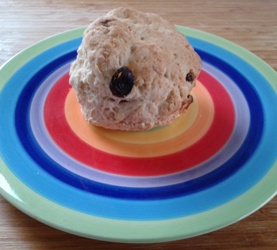
Reading: scones
Intermediate to higher level (B1-C2)
Scones are a fun tea-time British treat.
You can make them in about 30 minutes
and eat with jam and cream.
My recipe (personally tested!) will make about 6 scones.
Grammar – using ‘there’
Lower level (A1)
An important way to start a sentence in English is to use ‘there’. We can use it to tell people about what we can see and do etc. Continue reading
Reading: London visit
Lower to intermediate level (A2-B2)
Recently I met some old friends in London. We spent the day looking at the sights as we walked around the city. Continue reading
Pronunciation: not stressing syllables
All levels
Effective English pronunciation is often about deciding which part of a word is important and which part or parts are not important. If a syllable is not important, we often change the standard vowel sound to something more relaxed. You should try to learn how to do this. Continue reading
Reading
Elementary to Intermediate (A2-B2)
Britain doesn’t have the best reputation for weather. In some ways this is unfair because people sometimes think London is frequently foggy when in fact London is very rarely like this. Of course 70 years ago people burned a lot of coal to keep themselves warm and this produced some terrible smogs in the big cities. Continue reading
Punctuation
Intermediate to advanced (B1-C1)
If you want to have really clear writing don’t forget to use hyphens (-). In English we can use them to show more clearly what we are trying to communicate. Continue reading
Vocabulary
Elementary to intermediate (A1-B2)
Phrasal verbs are very common in conversational English. They usually have 2 or 3 parts to them.
Reading and video: exercising double-decker bus
Intermediate level (B1-B2)
A Czech artist has taken a classic British double-decker bus and made it do press-ups (you can also say ‘push-ups’) in time for the Olympics! Using hydraulics, huge red arms can lift up the bus. Continue reading
Reading: London Olympics
Advanced level (C1-C2)
If you were one of the hundreds of millions watching the opening ceremony of the Olympics, I wonder what you made of it. Most British people I spoke to found something that impressed them but of course if you watched it on TV you could only see what was broadcast and imagine the atmosphere. Continue reading